Dangote Petroleum Refinery
Africa's largest oil refinery — reshaping energy independence on the continent.
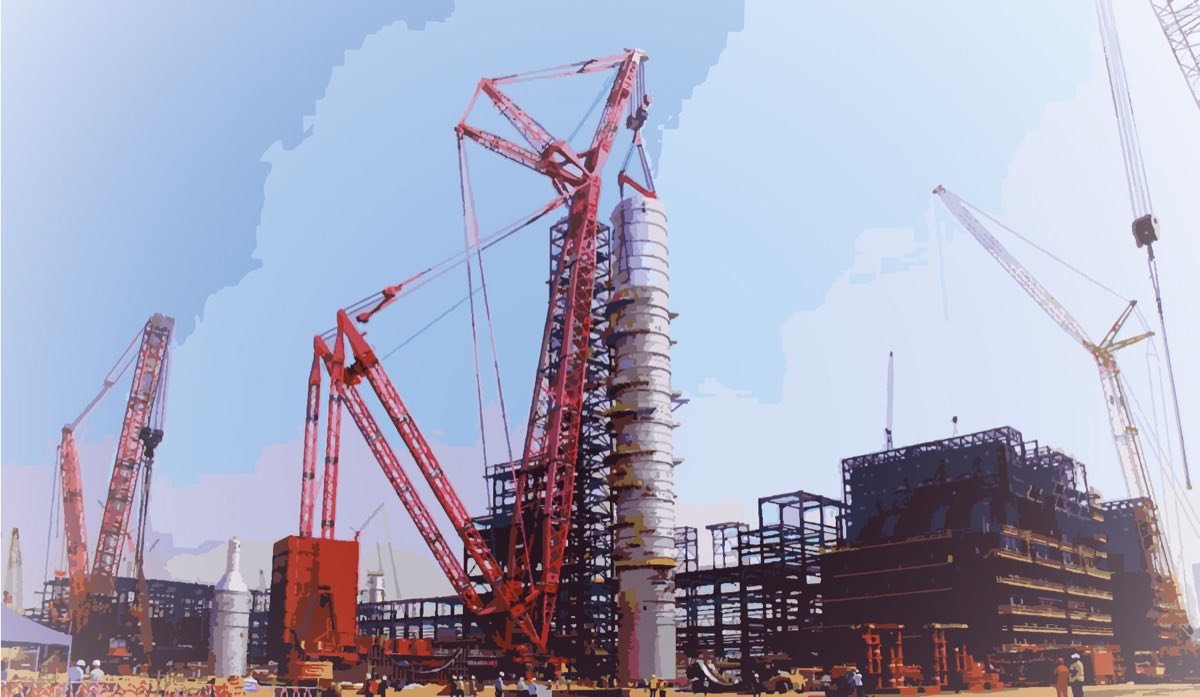
The Dangote Petroleum Refinery is a 650,000 barrels-per-day integrated refinery and petrochemical complex located in the Lekki Free Trade Zone near Lagos, Nigeria. Developed by Dangote Industries Limited, it is the largest single-train refinery in the world and the largest in Africa. The project aims to transform Nigeria from a net importer of refined petroleum products to a self-sufficient producer and potential exporter, fundamentally changing the energy economics of West Africa. The refinery sits on 2,635 hectares of land with direct deep-sea port access, and includes a 435 MW captive power plant capable of powering a small city.
- 01Achieve energy self-sufficiency for Nigeria by refining crude oil domestically instead of exporting raw crude and importing refined products
- 02Eliminate Nigeria's dependence on imported refined petroleum products, which previously cost the country over $10 billion annually in foreign exchange
- 03Create over 100,000 direct and indirect jobs across the entire value chain from construction through full operations
- 04Produce Euro-V quality fuels that meet international emission standards for cleaner air in African cities
- 05Supply petrochemical feedstock including polypropylene to local manufacturing industries, reducing import dependency for plastics and packaging
- 06Position Nigeria and West Africa as a net exporter of refined petroleum products for the first time in history
2013 · completed
Project Announcement & Ground Breaking
Dangote Group announces the refinery project with an initial investment estimate of $9 billion. Ground-breaking ceremony held at the Lekki Free Trade Zone site with support from the Nigerian federal government.
2016 · completed
Major Construction Phase Begins
Full-scale construction commences following completion of site preparation. Over 30,000 workers deployed on-site. Key process units including the crude distillation unit and residual fluid catalytic cracking unit begin fabrication.
2020 · completed
Mechanical Completion of Core Units
The crude distillation unit and several secondary processing units reach mechanical completion despite COVID-19 delays. Pre-commissioning testing and calibration of safety systems begins across the facility.
2023 · completed
First Crude Oil Received & Diesel Production
The refinery receives its first cargo of crude oil — 1 million barrels — and begins initial processing operations. Diesel (AGO) and aviation fuel (Jet-A1) production commences. First truck-out of diesel delivered to the Nigerian domestic market in January 2024.
2024 · completed
Petrol (PMS) Production Begins
The fluid catalytic cracking unit comes online, enabling production of Premium Motor Spirit (petrol/gasoline). First petrol delivery to the Nigerian National Petroleum Company (NNPC) in September 2024, marking a historic milestone in Nigeria's downstream sector.
2025 · in progress
Full Capacity Ramp-Up & Petrochemicals
Progressive ramp-up toward full 650,000 bpd processing capacity with all secondary units operational. Polypropylene production begins for domestic and export markets. Refinery targets processing multiple crude grades including Nigerian Bonny Light, Forcados, and Escravos blends.
Raw Material
Crude Oil Feedstock
650,000 barrels per day capacity, primarily Nigerian crude grades (Bonny Light, Forcados, Qua Iboe). Can also process other African and international crude blends.
Energy Input
Natural Gas Supply
Gas supply for hydrogen production, power generation via the 435 MW plant, and process heating. Sourced through dedicated pipeline infrastructure.
Utility
Water (Desalination)
On-site seawater desalination plant producing process water and cooling water, reducing dependence on municipal freshwater supply.
Infrastructure
Land & Port Infrastructure
2,635 hectares in the Lekki Free Trade Zone with a dedicated deep-sea port capable of receiving Very Large Crude Carriers (VLCCs) up to 300,000 DWT.
Human Capital
Workforce & Skills Transfer
Peak construction workforce of 30,000+. Over 100,000 direct and indirect jobs in operations. Extensive skills transfer and technical training programs for Nigerian engineers and operators.
- Fluid Catalytic Cracking (FCC) unit for high-yield gasoline production from heavy crude fractions
- Hydrocracking units for producing ultra-low-sulfur diesel and jet fuel meeting Euro-V emission standards
- Polypropylene production plant with 900,000 tonnes per year capacity — one of the largest in the world
- 1,100 km subsea pipeline infrastructure for crude oil delivery directly from offshore production platforms
- Advanced flue gas desulfurization and environmental monitoring systems for emissions control
- 435 MW captive power plant using combined-cycle gas turbine technology for self-sufficient energy supply
What it means for the community
The refinery is projected to save Nigeria over $10 billion annually in foreign exchange that was previously spent importing refined fuel products. It has created tens of thousands of skilled jobs and is catalyzing downstream industries in plastics, manufacturing, packaging, and logistics across West Africa. By producing Euro-V quality fuels domestically, it also reduces the environmental impact of lower-grade imported fuels that previously dominated the Nigerian market.
- Dangote Industries Limited